
From order as a human need to logistic values.
Contents
- Foreword
- Chapter 1 – Order as a Human Need
- Chapter 2 – Logistic Thinking
- Chapter 3 – Space, Time, and Motion
- Chapter 4 – The Logistics System
- Chapter 5 – Logistic Resources
- Chapter 6 – Efficiency, Performance, and Value
- Chapter 7 – Feedback and the Human Adjustment of the Logistics System
- Chapter 8 – From Logistic Thinking to Logistic Values
- Final Conclusion
Foreword – On the Logic Behind Logistics
This treatise is not meant to be a technical manual nor a collection of definitions. Its purpose is not to instruct, but to clarify.
Logistics, in its deeper sense, is not a sequence of procedures but a form of thought applied to order. To function effectively,
it must first be understood as an idea — only then as a method.
The author has therefore chosen to move from the abstract to the concrete. Such an approach may seem unusual to a reader
accustomed to treatises that begin with charts, formulas, and checklists. Yet without understanding the mental foundations
of order, all those instruments remain artificial. A warehouse is not efficient because it has shelves and codes, but because
there exists an ordered mind that gave them meaning.
The texts in this first module are not technical chapters but stages in the formation of logistic reasoning. Each adds a piece to
the construction of a discipline that, before moving goods, moves ideas. “Order as a Human Need” and “Logistic Thinking” are not
theoretical exercises; they describe the inner mechanism that allows any system to become coherent.
Calling this work a “treatise” is, in fact, a formal concession. It does not seek to provide exhaustive terminology or an
academic synthesis. Rather, it aims to revive the original spirit of logistics – a living, interdisciplinary science situated between reason
and action, between order and movement. That is why the text does not follow the rigid structure of university papers, but flows
as an explained reasoning, with its natural rhythm, free from the haste of demonstration.
The reader will discover that each chapter, no matter how abstract it may seem at first, contains the premises of practical application.
Each idea will later find, in the following modules, its concrete expression — in the organization of space, in the logic of flows,
in data analysis, or in the definition of logistic values. Thus, this first module is not an introduction but an initiation — a necessary
passage from logistics as an activity to logistics as a science of order.
Author
Chapter 1 – Order as a Human Need
“In logistics, order is not just a rule of work, but the condition for the existence of any controllable process.”
The Author

Fig. 1. “Order in Logistics” – generated with ChatGPT
1. Introduction – From Instinct to System
Order is the foundation of every logistic process.
Without it, there are no reference points, no data correlations, and flows turn into improvised reactions.
In logistics, order is not an aesthetic goal but a scientific tool — it enables measurement, predictability, and repeatability.
The human tendency to structure the environment is not a cultural trait but an adaptive reaction:
a warehouse, a production line, or a delivery route are all organized expressions of the same principle — the need to control variables.
Order provides decision-making clarity.
It reduces uncertainty, makes data comparable, and allows performance standards to be established.
Where order exists, time can be measured, costs can be calculated, and improvements can be designed.
Where it is absent, decisions rely on intuition, and results become unpredictable.
Therefore, the first step in any logistic initiative is not flow planning but establishing order as an operational principle.
Order creates the framework within which efficiency can be demonstrated, not merely assumed.
2. Order as a Universal Language
In a warehouse, order speaks without words.
Aligned racks, clear labels, and marked routes are visual sentences that communicate:
“We know what we are doing here.”
This visual clarity generates mental clarity.
The operator no longer searches, the manager no longer controls obsessively, and the client no longer waits.
Order becomes a form of trust among people who collaborate without friction.
On the Logistix Simplified website, the principles of this clarity are illustrated in practice through articles such as:
- How to Code Racking Locations in Warehouse
- ABC Zoning in Warehouse Layouts
But here, in the book, we go deeper: we do not explain the codes themselves, but the reason why the human mind needs them.
3. When Order Becomes Strategy
In logistics, order is not an aesthetic ideal — it is an economic strategy.
Every second saved, every cubic meter used efficiently, every avoided error translates into money.
An orderly warehouse:
- reduces idle time, increasing productivity;
- optimizes picking routes, increasing delivery speed;
- minimizes returns, increasing customer satisfaction.
Order generates profit through clarity.
It is not a cost, but a multiplier of value.
4. The Psychological Effect of Order
Order also has an invisible yet powerful effect: it disciplines thinking.
A clean and coherent space imposes an organized mind.
Operators become more attentive, decisions are made faster, and communication becomes simpler.
That is why an organized warehouse is not just a marketing image — it is a tool of human cohesion.
Where order exists, there is mutual respect and a shared sense of belonging.
5. Final Reflection
“Order is the proof of respect for time.”
In logistics, time is not gained through speed but through the elimination of chaos.
And chaos disappears only where everything has its place — and every person understands why.
The Logistician’s Edge — The Practical Value of Order
| Domain | Concrete Benefit | Final Impact |
| Operational | Reduction of errors and picking time | +10–20% efficiency per operator |
| Financial | Lower handling and return costs | Increased operational profit |
| Commercial | Faster and more accurate deliveries | Higher customer satisfaction and loyalty |
| Human Resources | Clarity, morale, natural discipline | Reduced staff turnover |
Chapter Conclusion
Order is the first step toward trust.
And in logistics, trust is the true currency of performance.
Every clear label, every clean space, every well-thought movement is a promise kept — to the client, to the company, and to oneself.
Order has no value if it remains static.
It becomes powerful only when it enables movement without chaos.
At the moment when an ordered system starts to function, a new challenge appears: how do we maintain clarity in motion?
Here begins logistic thinking — the process through which order becomes flow, and logic becomes action.
The next chapter explores exactly this step: transforming disorder into coherent, controllable, and profitable motion.
Chapter 2 – Logistic Thinking: How to Turn Disorder into Flow
“Flow is not just movement. It is the result of a mind that eliminates friction.”
Author

Fig. 2. “Logistic Thinking” – Generated with ChatGPT
1. Introduction – From Order to Motion
If order represents structure, flow represents dynamics.
It appears when order is applied in real time and when decisions, space, and information align into a coherent movement.
Logistic thinking is the applied form of systemic thinking.
It doesn’t look at an isolated process, but at the entire chain of causes and effects.
The goal is not only organization, but the reduction of friction between stages — of everything that slows down,
duplicates, or distorts the flow.
In a mature logistic system, flow becomes a measurable expression of thought:
- routes are logical,
- information arrives before the goods,
- timing is based on real capacity,
- people work in sync, without unnecessary dependencies.
Transforming disorder into flow doesn’t mean imposing more rules, but discovering the natural model of movement —
the one that allows energy, time, and space to be used optimally.
Efficient flow is not achieved through pressure, but through clarity.
And clarity is the result of logistic thinking trained to see beyond activities — to perceive the internal logic that connects them.
2. What Is Logistic Thinking
Logistic thinking is the ability to see processes in a chain, not in isolation.
An ordinary operator sees his own task.
A true logistician sees how that task affects the next ten.
This perspective turns every small decision into a system decision:
- if you delay at receiving, you affect the entire delivery flow,
- if you overload a location, you slow down picking,
- if you fail to communicate clearly, you stop the informational flow.
To think logistically means to foresee movement before it happens.
It is a form of rational anticipation — a discipline of causes and effects.
3. From Disorder to Flow
Every new warehouse begins in disorder: goods arrive, labels are missing, routes are undefined.
But flow doesn’t emerge through rules — it emerges through observation and adaptation.
A good logistician doesn’t ask: “How do I impose order?”
but rather: “How do I remove friction between movements?”
Flow appears when:
- information arrives before the goods,
- people know what comes next without asking,
- routes are logical,
- space adjusts itself according to the frequency of movements.
In a well-designed warehouse, flow is like a conversation — natural, without repetitions, without unnecessary pauses.
4. Simplicity, the Heart of Flow
Efficient flow doesn’t mean complexity — it means organized simplicity.
Often, an excess of rules blocks movement.
What releases flow is clarity:
- few but firm rules,
- short routes,
- essential information.
“A good flow doesn’t need constant control — only visible logic.”
This is the difference between procedures and principles:
procedures dictate what to do,
principles help you think correctly in any situation.
This logic of simplicity becomes visible in the organization of logistic flows — from receiving to shipping.
Each process, when reduced to its essence, follows the same rule: clear movement, precise information,
and no unnecessary steps.
On the “Warehouse Operations” page from our website, these principles are illustrated through the dedicated
diagrams for each operational process:
Receiving, Putaway & Storage, Picking, and Outbound Flow.
5. The Link Between Flow and Economic Value
A well-designed flow increases profitability without additional investment.
How? By reducing invisible losses:
- idle time between processes,
- unnecessary handling,
- duplicate checks,
- unclear responsibilities.
Flow doesn’t add work — it eliminates waste.
That’s why, in logistics, simplicity is a form of financial efficiency.
Clients feel this difference even if they cannot explain it:
deliveries arrive correctly, communication is clear, trust increases.
A coherent internal flow creates a positive flow between the company and its customers.
6. Final Reflection
Flow is the visible expression of invisible thinking.
Where things move without blockages, there is a mind that has ordered without imposing.
Logistic thinking is not about control, but about harmonizing movement.
When every element instinctively knows what to do, the system becomes alive.
💼 The Logistician’s Edge – The Practical Value of Logistic Thinking
| Domain | Concrete Benefit | Final Impact |
| Operational | Elimination of idle time between processes | +10–25% overall efficiency |
| Financial | Reduction of handling costs and errors | direct profit growth |
| Commercial | On-time delivery performance | customer loyalty |
| Quality & Audit | Full traceability and simplified control | enhanced compliance |
| Management | Clear decision-making, global visibility | faster team coordination |
Chapter Conclusion
Flow is not a physical state — it is a mental one.
Once you understand its logic, you can apply it anywhere:
in a warehouse, a project, a team, or a working day.
Logistics is, ultimately, the science that teaches us how to think in order — so we can move freely.
If logistic thinking defines the logic of flow, the warehouse gives it a visible form.
In physical space, principles become routes, rules become distances, and clarity becomes architecture.
In the next chapter, we will view the warehouse not just as a place, but as the material projection of how
we think in order.
Chapter 3 – Space, Time, and Motion
The three fundamental dimensions of logistics and how they define the boundaries of any operational system.

Fig. 3 “Logistics as the Balance of Space, Time, and Motion”
generated with ChatGPT
1. Premise
Every logistic activity unfolds within three essential dimensions: space, time, and motion.
They are to logistics what coordinates are to physics — the framework in which order becomes possible.
If the first two chapters defined the need for order and the thinking that organizes it, this one shows how
that order materializes through matter and human energy.
2. Space – The Invisible Resource
Space is not merely a surface where activities take place, but a finite resource that must be designed,
divided, and coded.
In logistics, every square meter has economic value, and the organization of space determines the
efficiency of movement.
The principle of localization: Every element has a logical place in relation to its frequency, flow, and value.
Coding: Space becomes intelligible through its own language — addresses, zones, routes, coordinates.
Balance between density and accessibility: A full warehouse is not an efficient warehouse.
Ordered space is the beginning of control.
Through it, logistics becomes a science of visibility and accessibility, while the lack of order translates
immediately into lost time and useless movement.
3. Time – The Measure of Efficiency
Time is the real currency of any logistic operation.
It measures not only duration but also the coherence of a system.
Synchronization – the essence of logistics. To deliver does not mean only to arrive, but to arrive when you should.
Process sequencing – the time between operations defines the flow; any delay becomes a loss.
Idle time – the hidden enemy of efficiency: stock, waiting, or movement without added value.
In logistics, time is not linear but cyclic: every operation connects to another in a continuous spiral of causes and effects.
Therefore, controlling time means, in fact, controlling the relationships between activities.
4. Motion – The Expression of Transformation
Motion is the visible form of the logistic process.
It transforms resources, moves them from one point to another, and gives them value.
But uncontrolled motion becomes chaos; only ordered motion — with purpose and rhythm —
generates performance.
The principle of movement utility – every displacement must create value: proximity to the customer,
to the next process, or to the completion of the flow.
Optimal motion – the shortest, yet also the clearest path between two points.
Synchronized motion – coordination of multiple actions at the same time (receiving, picking, shipping)
without interference.
Motion is, in fact, the measure of a system’s intelligence: the smoother the processes move, the more
coherent the logistic thinking behind them.
5. The Law of Space–Time–Resource Balance
These three dimensions do not exist separately.
Any optimization in one creates tension in the others.
This is the law of equilibrium in logistics:
Efficiency = f(Space, Time, Motion)
Reducing space requires accelerating motion.
Reducing time requires reconfiguring space.
Increasing motion requires additional resources and tighter control.
Logistics lives from the continuous negotiation between these variables.
Here lies the art of the logistics manager: finding the point of balance where the system operates without
stress, waste, or chaos.
6. Conclusion
Logistics is the art of turning movement into order.
Space provides the context, time gives it meaning, and motion makes it visible.
Together, they define the physical field of logistic reasoning — the place where thought becomes action.
Without space, logistics has nowhere to manifest.
Without time, it has nothing to measure.
Without motion, it has nothing to improve.
Thus, these three dimensions form the first tangible expression of order in the material world:
an order that is not static but dynamic — an order that breathes, moves, and self-regulates.
Chapter 4 – The Logistics System
Logistics is not a sum of operations, but a system of relationships.
Its power lies not in the efficiency of each part, but in the coordinated balance of the whole.

Fig.4 – “Logistics as the Balance of Inputs, Processes, and Outputs”
– generated with ChatGPT
1. Premise – From Process to System
So far, we have seen logistics as an ordered form of thinking, unfolding in space, time, and movement.
But to truly understand its essence, we must rise one level higher: to see logistics not as a
succession of processes, but as a living system.
A process has a beginning and an end.
A system, however, never closes.
The result of one action becomes the cause of another, and the flow perpetuates itself in a
continuous loop of transformation.
This continuity is what differentiates mechanical logistics from rational logistics — the one in
which every action has meaning within the whole.
2. The Structure of the Logistics System
Any logistics system can be described through three fundamental elements:
Inputs – the resources entering the system: materials, information, energy, people.
Processes – the transformations that add value and bring resources closer to their purpose.
Outputs – the visible results: services, deliveries, data, feedback.
Between these elements lies the information loop — the invisible flow that connects everything
and enables self-regulation.
Without it, logistics would be mere blind motion.
With it, it becomes operational intelligence.
3. The Properties of a Logistics System
A genuine logistics system can be recognized through several essential traits:
Interdependence – no activity makes sense outside the whole.
Directionality – every action is oriented toward a common goal: delivery, service, customer satisfaction.
Feedback – every result generates information that corrects or confirms the system.
Adaptability – the ability to absorb variations without losing structure.
Optimization – the constant search for balance between cost, time, and quality.
These traits do not reflect rigid control, but a form of ordered freedom — a balance between
discipline and adaptability, between rule and judgment.
4. Systemic Logic – The Closed Loop
The logistics system operates according to circular logic, a closed-loop pattern:
Input – resources enter the system.
Processing – they are transformed.
Output – results become visible.
Feedback – information returns, adjusting the cycle.
This loop creates learning.
Each error becomes a lesson; each deviation – a source of refinement.
Thus, logistics becomes a collective intelligence, not merely a collection of activities.
In a mature logistics system, error is not guilt, but information.
5. The Human Dimension of the System
Though it may seem like a perfect mechanism, the logistics system remains profoundly human.
It lives through those who animate it — people who observe, anticipate, and correct.
The operator is rhythm and precision.
The planner is vision and anticipation.
The manager is the balance between pressure and harmony.
Together, they form the living software of the system — that tacit intelligence that understands context
where the algorithm only calculates.
6. The Principle of Systemic Efficiency
The efficiency of a logistics system is not achieved when each component performs at its maximum,
but when the whole functions harmoniously.
A warehouse may work faster, but block transportation.
Purchasing may buy cheaper, but overload stock.
Delivery may rush orders, but reduce accuracy.
True efficiency is the efficiency of coordination, not of individual effort.
The logistics system is like an orchestra: if everyone plays loudly but on a different score, the result is noise, not music.
7. Self-Regulation and Evolution
The logistics system grows through feedback.
It learns, adapts, and transforms.
With each cycle of planning–execution–control, it becomes more refined.
When feedback becomes continuous, logistics ceases to react and begins to anticipate.
Then the system is no longer merely productive but wise — capable of self-correction without external constraint.
8. Conclusion
The logistics system is the visible expression of order in motion.
It transforms resources into services, data into knowledge, and repetition into improvement.
It is not a rigid structure, but a dynamic balance between input, process, and output — between the tangible
and the informational, between intention and action.
Logistics is the balance between inputs, processes, and outputs.
When this balance is achieved, motion gains meaning, and order comes to life.
Chapter 5 – Logistic Resources
Every system lives through its resources.
Logistics is not only a science of flows, but also an art of balance between people, information, and matter.

Fig.5 – “Logistic Resources” – generated with ChatGPT
1. Premise – The Hidden Life of the System
If in the previous chapter we viewed logistics as an ordered system of processes and interdependencies,
here we descend into the core of that system, where order takes substance: into the resources.
Without resources, logistics remains an inert scheme.
But without an ordered way of thinking about resources, they become mere chaotic accumulations —
uncoordinated work, useless data, purposeless stocks.
The equilibrium of the logistic system begins with understanding and governing its resources.
2. What Are Logistic Resources
Logistic resources are all the elements that support the orderly movement and transformation of goods,
information, and decisions.
They are not limited to the material aspect; in logistics, a resource is any entity that participates in the
functioning of the system.
They can be grouped into five major categories:
Human Resource – intelligence, decision, and action.
Logistics exists through people who think, plan, and execute.
The human being is both a source of error and of innovation — which is why training and clarity of roles become vital.
Material Resource – the physical infrastructure: buildings, equipment, vehicles, packaging.
It provides the visible support of processes but requires constant maintenance and adaptation to needs.
Informational Resource – data, codes, documents, and systems that connect everything.
It is the invisible blood of logistics: without coherent information, the material flow disintegrates.
Energy Resource – the energy needed for movement: electricity, fuel, physical effort.
Although often ignored in logistic analysis, energy defines the hidden cost of every flow.
Financial Resource – the capital that enables operation and investment.
It does not create value by itself but makes order possible through stability and predictability.
3. The Relationship Between Resources and Processes
In a mature logistic system, resources are not managed separately but coordinated as parts of a single mechanism.
A decision affecting one resource immediately reflects upon the others:
- a staff shortage affects time and quality;
- incomplete information generates unnecessary movement;
- an unjustified financial saving creates material or energy imbalance.
Therefore, resource management is not an accounting activity but a continuous act of balancing.
4. Governance of Resources – Beyond Possession
Owning a resource does not mean mastering it.
Logistic governance means understanding the role of each resource in the dynamics of the whole.
Instead of accumulation, logistics values the relationship between resources.
- The human resource needs information to make decisions.
- The material resource needs energy to function.
- The informational resource needs human discipline to remain coherent.
- The financial resource sustains all the others but can destabilize them if seen as an end rather than a means.
Thus, the logistic system is an ecosystem, not a warehouse of resources.
5. The Principle of Resource Balance
Resource balance is achieved not through quantity, but through proportion.
A system can function with less if that “less” is properly arranged.
This is the golden rule of logistics:
Efficiency does not result from abundance, but from harmony.
A resource used beyond needs becomes waste; one used below needs becomes a bottleneck.
The logistician’s mission is to constantly adjust these differences — to understand where to grow,
where to simplify, and where to merely organize.
6. The Dynamics of Resources – From Consumption to Regeneration
Resources are not static; they are consumed, transformed, and regenerated.
A living logistic system must foresee mechanisms of regeneration:
- training people (for the human resource);
- maintenance and modernization of equipment (for the material resource);
- data cleansing and system updates (for the informational resource);
- optimization of consumption (for the energy resource);
- investment planning (for the financial resource).
In the absence of regeneration, order decays and the system returns to chaos.
7. Conclusion
Logistic resources are the living organism of order.
They give substance to ideas and transform plans into reality.
But their value does not lie in volume, but in the harmony among them.
Logistics succeeds when people, data, space, and energy move in unison — not out of constraint,
but out of understanding.
Logistics is the balance between human, material, and informational resources.
Where this balance exists, the system becomes not only efficient but also sustainable.
Chapter 6 – Efficiency, Performance, and Value
Efficiency is the measure of order.
Performance is the proof of coherence.
And value is the common meaning of both.
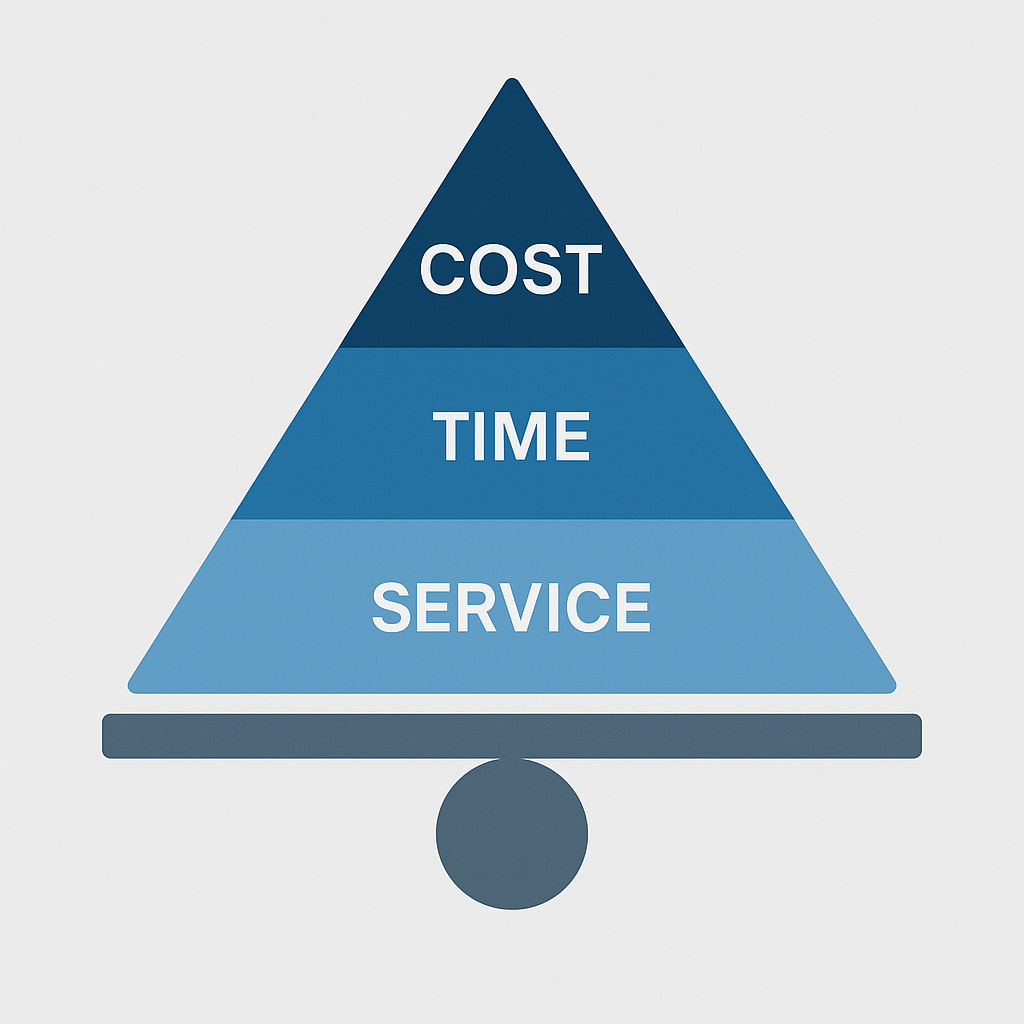
Fig.6 – “ Efficiency, Performance, Value” – generated with GhatGPT
1. Premise – The True Meaning of Efficiency
In logistics, the terms efficiency and performance are often confused.
Efficiency expresses the relationship between resources and results,
while performance expresses the system’s ability to fulfill its purpose.
A process can be efficient but not performant — for example, when it works fast but makes mistakes.
Likewise, a system can be performant but inefficient — when it achieves the desired result at too high a cost.
True logistical maturity is achieved when the two become convergent:
when every invested resource produces not just movement, but measurable value.
2. The Difference Between Efficiency and Performance
Efficiency belongs to the inner workings of the system.
It concerns how resources are used: time, space, people, energy.
Efficiency is the silence of order — unseen, yet deeply felt.
Performance, on the other hand, is the visible expression of efficiency.
It is measured through delivery, accuracy, speed, and satisfaction.
It is the mirror in which the system sees its result.
In a mature logistics organization, efficiency and performance feed each other:
the first reduces waste, the second confirms purpose.
3. Logistics as a Source of Added Value
For a long time, logistics was seen as a cost center — necessary but not productive in a direct
economic sense.
This perception is wrong.
Logistics creates value in three essential ways:
- By reducing uncertainty – it brings reliability, transparency, and traceability.
- By accelerating flow – it turns lost time into productivity.
- By improving the experience – it contributes to customer trust and brand image.
Thus, logistical value is not merely financial, but systemic:
it results from how order propagates throughout the entire supply chain.
4. Indicators – The Mirror of Order
In a logistics system, indicators are not just numbers.
They are the footprints of order — the vital signs of a complex organism.
- Productivity shows the balance between motion and resources.
- Accuracy shows the quality of execution.
- Lead time shows the coherence of the flow.
- OTIF (On Time In Full) shows the level of trust between partners.
Indicators should not be hunted but understood.
They are not goals, but symptoms.
A healthy system does not boast about the values in its reports,
but about the order that made those values possible.
5. The Cost–Service–Time Balance
Every logistical decision rests upon this fundamental triangle:
Value = f(Cost, Service, Time)
- Reducing cost may lower service quality.
- Increasing service may impose additional costs.
- Speeding up time may destabilize the flow.
Logistics does not seek extremes but balance among these variables.
The logistics manager is not a cost accountant but an architect of balance.
Their mission is not to reduce, but to harmonize.
6. The Law of Logistic Yield
In logistics, yield does not grow indefinitely.
Beyond a certain point, each local improvement creates a global loss.
This is the Law of Logistic Yield:
Any isolated optimization, uncorrelated with the system, reduces overall performance.
A faster picking process can create shipping errors.
A shorter route can cause congestion at receiving.
A stock reduction can lead to shortages in peak season.
Therefore, logistics does not pursue absolute speed but coherent speed —
the optimal motion that maintains system-wide equilibrium.
7. Conclusion – Value as an Expression of Harmony
Efficiency, performance, and value are not separate goals,
but reflections of the same order.
Efficiency is inner order.
Performance is visible order.
Value is acknowledged order.
When these three dimensions meet, logistics ceases to be a support function
and becomes a form of governance.
It no longer delivers only products, but trust, rhythm, and stability.
Logistics is the balance between cost, time, and service.
When this balance is achieved, order transforms into value.
Chapter 7 – Feedback and the Human Adjustment
of the Logistics System
A logistics system does not improve through technology, but through attention.
Feedback is not a report, but a form of collective awareness.

Fig.7 – “Human adjustment of the Logistcs System”
generated with ChatGPT
1. Premise – Logistics as a living organism
Every logistics system, regardless of size, is alive.
It breathes through the movement of goods, through the time between operations, and through people’s daily decisions.
When something falls out of balance – a delay, an error, a lack of communication – the system feels it.
But the reaction of this organism is not automatic.
In small and medium-sized logistics systems, balance is not maintained by software or algorithms, but by human vigilance.
Here, adjustment is not made through code, but through eyes, dialogue, and discernment.
2. Feedback as a mirror of reality
Feedback is the tool through which logistics looks at itself.
It shows what works and what doesn’t, but only if it is collected and understood correctly.
In small warehouses, feedback doesn’t need automated systems.
It manifests through:
- Direct observation – an operator notices a discrepancy;
- Short team discussions – what got blocked, why, and how to avoid it;
- Visual signals – a mark, a note, a color code;
- Simple reception or shipping logs – small, but constantly updated.
True feedback is not statistical, but concrete and immediate.
It appears in real time and disappears if it is not heard.
3. The human role in system adjustment
In a manually governed logistics system, every person is a sensor.
They detect deviations, report them, and contribute to correction.
- The operator detects the first signs of imbalance: missing label, delayed truck, wrong location.
- The coordinator interprets these signals and decides on immediate action.
- The manager analyzes root causes and proposes procedural changes.
This vertical and horizontal communication turns the system into a mechanism of collective learning.
Every action becomes a lesson, every mistake – an exercise in thinking.
4. Learning from errors
In logistics, error is inevitable.
But between an efficient organization and a chaotic one, the difference is not in the number of mistakes,
but in how they are treated.
Weak systems hide errors.
Mature systems document them and turn them into better rules.
Today’s error becomes tomorrow’s procedure.
This is the healthy logic of feedback: not guilt, but cause; not punishment, but prevention.
Through this attitude, logistics becomes a science of continuous learning, even without technology.
5. Manual adjustment – the art of the logistician
To manually adjust a logistics system means to feel it.
It is the art of compensating small imbalances without destabilizing the whole.
Examples are endless:
- Temporarily reorganizing the space when the flow of goods doubles;
- Redistributing tasks when the team is incomplete;
- Reordering daily priorities based on the trucks scheduled to arrive.
No software can fully anticipate these moments.
They require a form of situated intelligence – the logistician’s judgment, trained by experience.
In small systems, this judgment is more valuable than any equipment.
6. The culture of feedback – the foundation of living order
Feedback is not an occasional action, but a working culture.
It exists where people are accustomed to observe, communicate, and correct without fear.
A mature logistics team has three reflexes:
- Transparency – openly communicating any deviation;
- Analysis – seeking causes, not culprits;
- Improvement – changing what led to the error, not adding bureaucracy.
Order is maintained not through control, but through collective attention.
A warehouse where everyone sees but no one speaks is a blind system.
7. Conclusion – Logistics as a conscious organism
Feedback is proof that the system is alive.
It shows that people do not just execute, but also think.
That order is not imposed, but maintained through vigilance.
The self-regulation of a manual logistics system is not automatic, but human, progressive, and lucid.
It is based on continuous attention, learning from mistakes, and the desire to improve
what already works.
Logistics is the balance between experience, observation, and correction.
Where people think, the system self-adjusts without automation.
Chapter 8 – From Logistic Thinking to Logistic Values
Logistics is not learned only through rules, but through mindset.
When order becomes a reflex, it transforms into a value.

Fig.8 – “ From Logistic Thinking to Logistic Values”
generated with ChatGPT
1. Premise – From reason to culture
In the previous chapters, we understood logistics as a form of ordered thinking:
we started from the human need for order, defined space and time as dimensions of action,
viewed the system as a living organism, and resources as the substance of operation.
Now, this thinking must go beyond the analytical sphere and become a moral and professional reflex.
Because at a certain level, logistics is no longer just an operational science – it is an organizational culture.
It shapes the way people think, communicate, and make decisions.
2. Order as a principle of action
Order is no longer an objective, but a condition of existence.
It is not imposed through procedures, but manifested through consistency.
When logistic thinking has matured, order becomes natural:
- Things are in the right place without being asked for;
- Information circulates without delay;
- Decisions are made without fear, because the logic is clear.
This is where logistic culture begins: not where order is applied, but where it is lived.
3. Simplicity, precision, and responsibility
These three values are the roots of any logistic maturity.
Simplicity – because only what is simple can be reproduced, understood, and improved.
In logistics, complexity is a failure of thinking, not a sign of refinement.
Precision – because every decision reflects in cost, time, and trust.
Accuracy is not a technical detail, but a form of respect for both the system and the people.
Responsibility – because every imbalance begins with negligence.
An ordered system is one in which everyone understands their impact.
These values transform logistics from a mere operational function into an ethics of organization.
4. The value of the orderly person
Behind every process there is a mind that designed it and a will that sustains it.
The orderly person is not only efficient but also predictable, lucid, and balanced.
They create around themselves the stability that every logistics system needs to function.
A mature logistician does not work to avoid mistakes but to understand them.
They know that perfection does not mean the absence of errors, but the ability to turn them into learning.
Thus, the human becomes the first self-regulating instrument of the system.
5. From system to culture
When these values are repeated daily through behavior, they turn into a logistic culture.
A warehouse is no longer just a workplace, but a school of order.
A logistics team becomes a community that shares the same principles: clarity, balance, rigor.
This culture is not measured in indicators, but in consistency –
in the way people think alike even in the absence of a supervisor,
in the way every decision follows the same logic of simplicity.
A coherent system produces stable results.
A coherent culture produces lasting stability.
6. The bridge toward logistic values
Everything built in this first module – order, thinking, space, system, resources, efficiency, and feedback –
now converges into one essential question: what values govern all these principles?
From here begins the next stage of the treatise: The Values and Principles of Logistic Thinking.
If Module 1 was about how order is born, Module 2 will be about how order is lived.
It is the transition from reason to conviction, from understanding to action.
From logistics as a science to logistics as a vocation.
Final conclusion of Module 1
Logistics is, in its essence, a form of applied lucidity.
It is born from the need for order, grows through systemic thinking, and is perfected through balance.
But its true strength emerges when it becomes part of the way we are.
Logistics is the balance between thinking, discipline, and values.
When order becomes culture, logistics ceases to be a domain –
and becomes a form of practical wisdom.
© 2025 www.logistix-simplified.com · The Logic of Logistics · Generated with the help of ChatGPT